
That charcoal gray wool suit. I can still feel the itch.
My mother forced me into it every Easter Sunday. It smelled like mothballs and old closet air. I was ten. I didn’t care about the empty tomb or the theology of resurrection. I cared that the collar was strangling me. I cared that I was missing Saturday morning cartoons. We sat in the pew because the calendar said so. It wasn’t devotion; it was a schedule.
We all do this. The calendar flips, and we move. Time to celebrate. Time to mourn. Time to show up.
That memory hits me hard when I read John 2:13. It’s a deceptively simple line. It acts as a bridge, but it’s holding up the weight of the entire Gospel narrative.
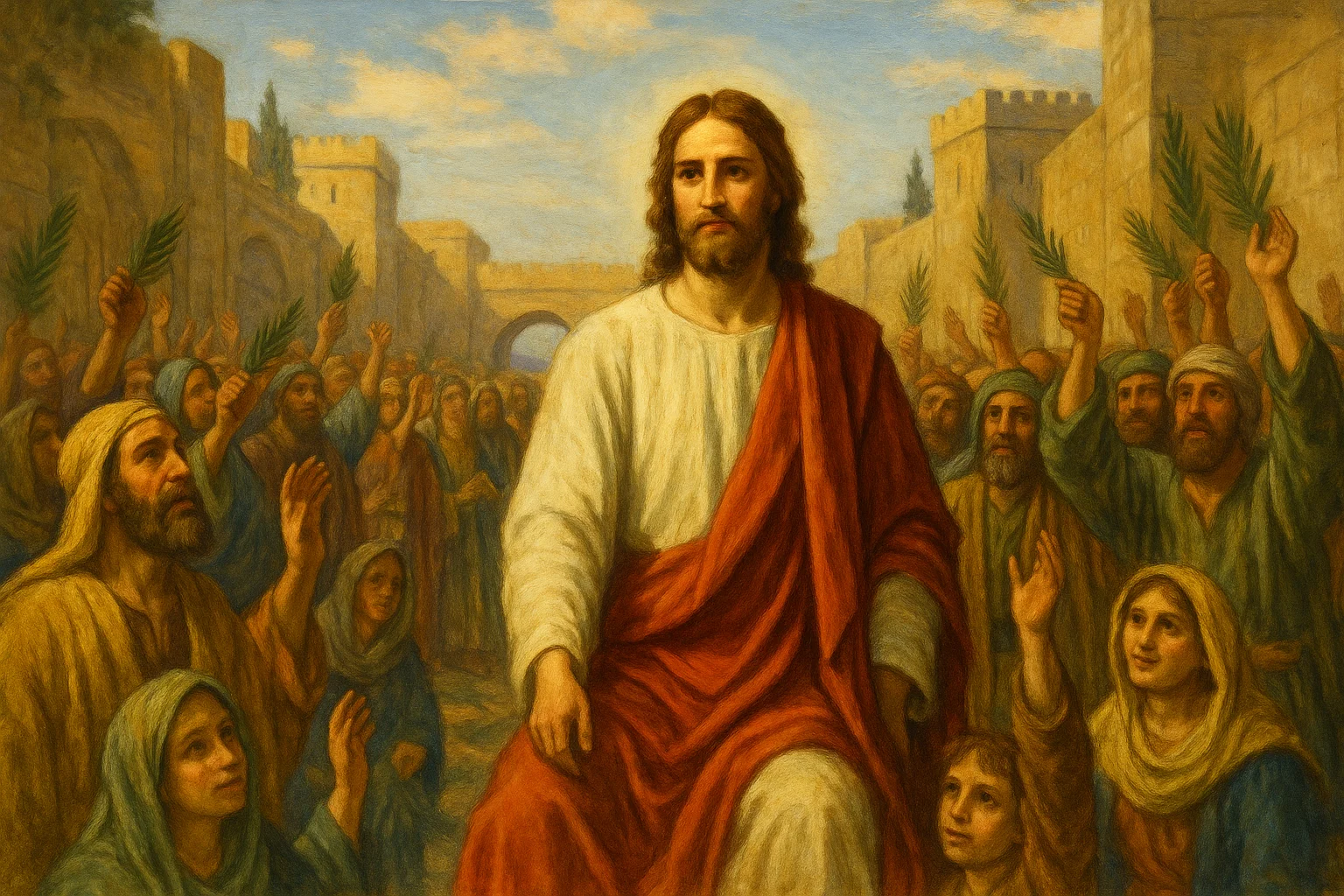
“When it was almost time for the Jewish Passover, Jesus went up to Jerusalem.”
Sounds like a travel log. A quick diary entry. Don’t be fooled. This isn’t a road trip. It’s a confrontation.
More in John Chapter 2 Category
Key Takeaways
- The Clock Ticks: John links this trip directly to Passover. He’s tagging Jesus as the Lamb before the story even really starts.
- The Climb: “Went up” isn’t just geography. It’s spiritual. You leave the lowlands to face the high stakes of the Temple.
- Wrecking the Status Quo: Jesus doesn’t go to Jerusalem to join the party. He goes to flip the tables.
- Following the Rules: He’s the Son of God, yet He submits to the law. He validates the covenant right before He fulfills it.
- Picking a Fight: This journey is the warm-up act for the Temple cleansing. Real worship gets messy.
Why Does the Timing of John 2:13 Matter So Much?
Context is everything. Ignore the calendar, and you miss the point. John doesn’t just tell us where Jesus went. He tells us when.
Passover.
This wasn’t just a holiday for the Jews. It was the event. Picture the Fourth of July, Thanksgiving, and a funeral rolled into one massive, chaotic week. They were celebrating freedom from Egypt. They were remembering the blood on the doorposts. The angel of death passing over.
John isn’t just checking a box here. He’s handing you a lens.
John the Baptist had already called Jesus “the Lamb of God.” Now, that Lamb is walking into the city where they slaughter lambs. Feel the tension? It’s heavy. The crowd saw a pilgrim coming to pray. John wants you to see the Sacrifice coming to die.
I went to a national college football championship once. The energy in the city was bordering on dangerous. You could feel the vibration in the asphalt. Thousands of people. One obsession. High stakes.
Multiply that by a hundred. That’s Jerusalem in John 2:13.
What Was the Atmosphere Like When Jesus Went Up to Jerusalem?
Ever walk into a bar and know a fight is brewing?
That’s the vibe. Jerusalem wasn’t a quiet sanctuary. It was a powder keg. Historians say the population jumped from 50,000 to over 100,000 during the festival. Pilgrims jammed the narrow streets. The air reeked of roasting meat, sweat, and animal dung.
Loud. Messy. Intense.
Jesus walks right into this pressure cooker. He leaves the quiet hills of Galilee for the religious machine of Judea.
Is there a hidden tension in the text?
You bet. The verse says Jesus “went up.” Geographically, that works; Jerusalem sits on a plateau. You always hike up to get there.
I run. I do hill repeats until my lungs burn. There’s a physical toll to ascent. Your breathing shifts. Your legs scream. You have to want the top.
But Scripture rarely talks about elevation just for the sake of cardio. “Going up” is spiritual. You approach the throne. Jesus moves toward His destiny. He isn’t wandering. He’s climbing toward the conflict that kills Him.
He knows what the religious leaders have done to the city. He knows the corruption rotting the Temple courts. He goes anyway. He doesn’t skirt the mess. He walks straight into the center of it.
How Does This Moment Connect to the Wedding at Cana?
Rewind a few verses. Jesus is at a wedding in Cana. Great story. Joyful. Domestic. He turns water into wine to save a groom from social suicide. It’s abundance. It’s a party.
Then, the camera cuts. Hard.
We go from a wedding to a slaughterhouse. From the best wine to the blood of bulls. Why put these two back-to-back?
John shows us the range. Jesus is the Lord of the feast. He brings joy. But He is the Lord of the Temple. He brings judgment.
You can’t have Cana without Jerusalem. We all want the wine. We want the miracle that fixes our problems. We aren’t so keen on the Jesus who marches into the capital to flip tables and demand purity.
The meaning of John 2:13 bridges the gap. The same Savior who cares about your joy cares violently about God’s honor.
Why Did Jesus Feel the Need to “Go Up” Spiritually and Physically?
Obedience.
Men hate that word. We like to lead. We give the orders. But here is the ultimate Man, submitting to the Law.
Deuteronomy commanded all Jewish males to show up three times a year. Passover was the big one. Jesus didn’t play the “I’m God” card. He didn’t skip the commute.
He showed up.
There’s power in showing up when the system is broken. Jesus knew the Temple was a racket. He knew the priests were skimming off the top. Yet, He respected the institution enough to present Himself.
Are we just checking boxes?
I ask myself this constantly. Do I go to church because I’m hungry for God? or because it’s Sunday and I’m supposed to?
Jesus went with intent. He wasn’t drifting. He was driving.
What Does John 2:13 Teach Us About Religious Obligation vs. Heart?
Here is where the rubber meets the road. Getting lost in the crowd is easy.
Imagine the throngs pressing through the gates. Thousands. How many were there to meet Yahweh? How many were just buying a lamb to get it over with?
Most were just doing their duty.
Then there’s Jesus. He cuts through the noise with a singular focus. He isn’t there to buy a lamb. He’s there to be the Lamb.
I volunteered at a soup kitchen in my twenties. My mentor said it would “build character.” I was ladling soup, smiling, faking it. Then I saw another guy. He wasn’t behind the line. He was sitting with the homeless men. Eating the same soup. Looking them in the eye.
I was doing a job. He was doing ministry.
That’s the difference. The crowds in John 2:13 were tourists. Jesus was on a mission. This verse challenges me to stop playing tourist in my own faith. Stop “going up” just to be seen. Go up to encounter the living God.
How Does the Passover Backdrop Shadow the Cross?
You can’t separate John 2 from John 19. The shadow of the cross stretches all the way back here.
John puts this journey at the start of his Gospel. The other guys—Matthew, Mark, Luke—put the Temple cleansing at the end. John moves it up. He’s making a statement. Everything Jesus does must be viewed through the lens of Passover.
He is the substitute.
- The Lamb: Exodus says the lamb dies so the firstborn lives.
- The Temple: The meeting place of God and man.
- The Conflict: Jesus disrupts the sacrifice because He is the sacrifice.
When Jesus steps into Jerusalem in John 2:13, the clock starts ticking. Religious leaders tolerate a lot. They don’t tolerate people messing with their money. Jesus walks into the lion’s den.
He isn’t naive. He’s brave.
If you want the deep dive on the history here, check out this resource from Yale University. It gives you the scholarly grit behind the text.
What Can Modern Believers Take Away from Jesus’ Journey?
We don’t trek to Jerusalem. We don’t kill lambs. So what does John 2:13 mean for a guy in Chicago or a farmer in Nebraska?
Disruption.
Jesus went to the center of religious life and found it wanting. He didn’t stay safe in Galilee. He went to the problem.
Sometimes faith demands we go to the hard places. Maybe it’s a brutal conversation with your wife. Maybe it’s calling out an ethical disaster at work. Maybe it’s dealing with that sin you keep locked in the basement.
Going “up to Jerusalem” takes guts. It means facing the music.
I have a friend. Battled addiction for years. He managed it. Kept it away from his “Cana” moments—his parties, his public face. But eventually, he had to make the trip to his personal Jerusalem. He walked into a rehab center. Confessed. Let the tables get overturned.
It hurt. It was chaotic. But it was the only way to get to the resurrection.
Did Jesus Go Alone?
Text says “Jesus went up.” Singular focus. His disciples were likely trailing him, confused, overwhelmed by the smell and the noise.
Leadership is lonely. Doing the right thing is lonely.
Look at your own life. The moments you grew? They were the uphill climbs. The times you walked alone while everyone else coasted downhill. It’s hard to say, “No, we’re going this way,” when the culture flows the other way.
Jesus models a masculine, steel-spined resolve. He sets His face like flint. He doesn’t poll the audience. He goes where the Father calls.
The Transition: From Celebration to Confrontation
Respect the pivot. Life isn’t always a wedding. Sometimes it’s a war zone.
John 2:13 signals the end of the honeymoon. Ministry starts now. Jesus revealed His glory at Cana. Now He reveals His authority at Jerusalem.
This verse is the hinge.
If your life feels like a battle right now, take heart. You might be in your “Jerusalem” phase. The feast feels like a dream. You’re surrounded by noise, demands, and people who don’t get it.
Jesus has been there.
He walked that dusty road. He pushed through the sweat and the crowd. He smelled the smoke. He knows what it takes to stay faithful in hostile territory.
Conclusion
John 2:13 isn’t a travel itinerary. It’s the opening move of a rescue mission.
Jesus goes to Jerusalem for Passover not to join a ritual, but to keep a promise. He walks into the city that kills prophets, knowing He is the final Prophet. He watches the Passover knowing He is the final Lamb.
The meaning of John 2:13 pushes us. Stop watching. Start moving. Go “up” to worship not out of habit, but out of hunger. Jesus isn’t just a guest at your wedding; He’s the Lord of your temple.
Next time you feel the itch of obligation—like a kid in a scratchy wool suit—remember this verse. Remember the Man who walked uphill, into the teeth of the religious machine, to fight for you.
Don’t just go to church. Go up to meet Him.
FAQ – John 2:13
Why is the timing of John 2:13 significant in understanding Jesus’ mission?
The timing of John 2:13 is significant because it coincides with Passover, emphasizing Jesus as the Lamb who is about to sacrifice himself. It highlights that His journey to Jerusalem is not just a physical movement but a spiritual confrontation with the corrupt religious system, underscoring the gravity of His mission.
What does the phrase ‘went up’ to Jerusalem symbolize in the context of John 2:13?
The phrase ‘went up’ symbolizes both a geographical and spiritual ascent. Geographically, Jerusalem sits on a plateau, but spiritually, it signifies Jesus’ approach toward His destiny, entering the heart of conflict and confrontation with the religious establishment to fulfill His purpose.
How does the backdrop of Passover influence the events in John 2:13 and its symbolism?
Passover, being the pivotal event of liberation and sacrifice, casts a shadow over Jesus’ actions. It signifies that Jesus is the ultimate sacrifice, the Lamb whose death will bring spiritual freedom, and His confrontation in the temple reflects the culmination of this divine plan rooted in Passover traditions.
What lessons can modern believers draw from Jesus’ decision to ‘go up’ to Jerusalem during Passover?
Modern believers can learn the importance of courage and obedience in confronting wrongs and seeking authentic faith. Jesus’ example encourages confronting difficult situations with resolve and purpose, rather than avoiding or ignoring uncomfortable truths in pursuit of true worship and integrity.
Does Jesus go to Jerusalem alone, and what does this imply about leadership and faithfulness?
While Jesus’s journey is described as ‘going up,’ implying a singular focus, His disciples likely followed Him, though they were confused or overwhelmed. This highlights that leadership often involves solitude and resolve, with faithfulness requiring one to go alone in conviction, modeling steadfastness in pursuit of God’s calling.