
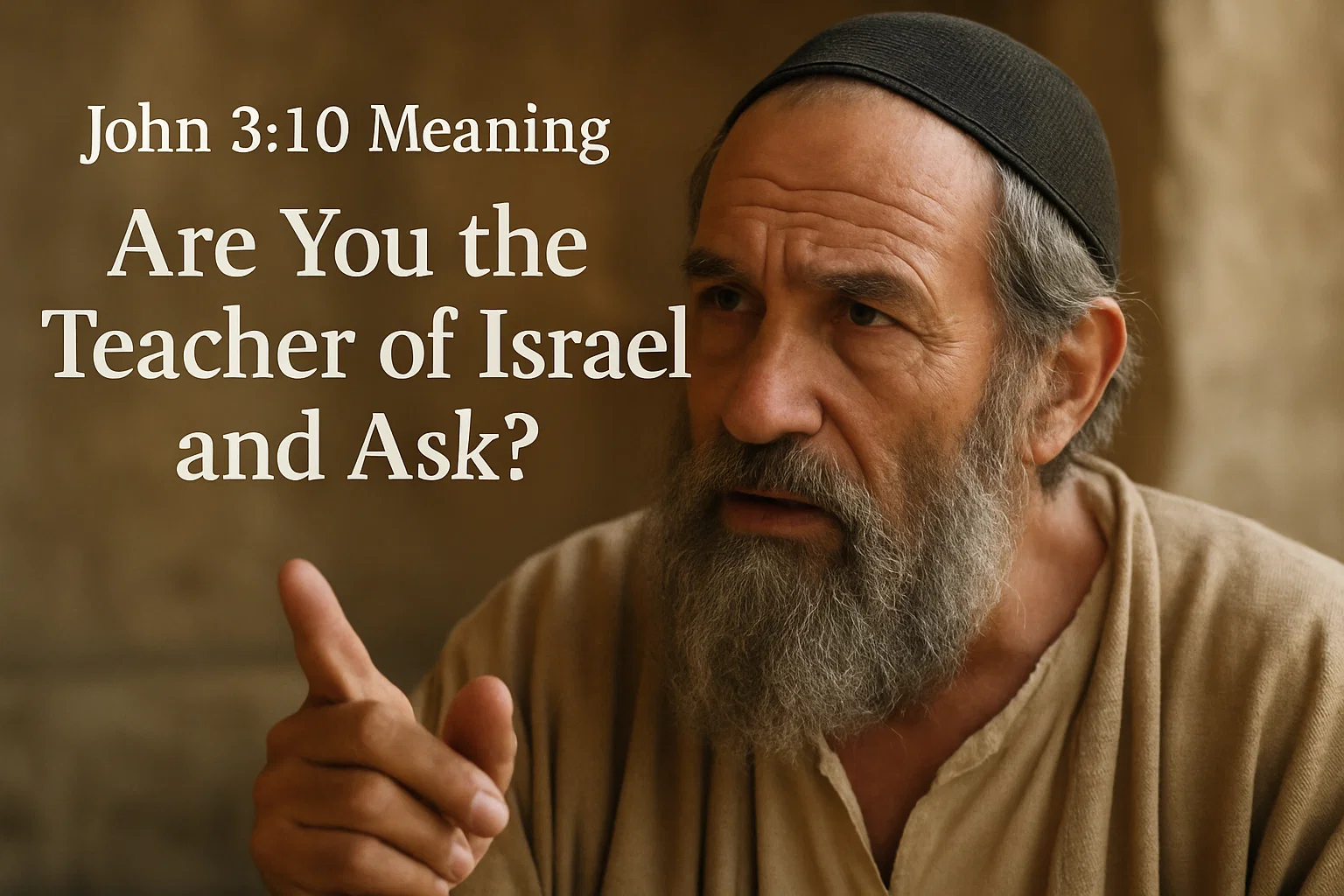
Picture the scene. It’s late. The Jerusalem alleys are dark. Most people are asleep, but one man is sneaking through the shadows. This is Nicodemus. He isn’t some random guy; he’s got the robes, the status, and the reputation. He’s the religious elite.
He tracks down the new teacher from Nazareth. He walks in, probably expecting a polite chat about theology. He starts with a compliment, trying to break the ice: “We know you come from God.”
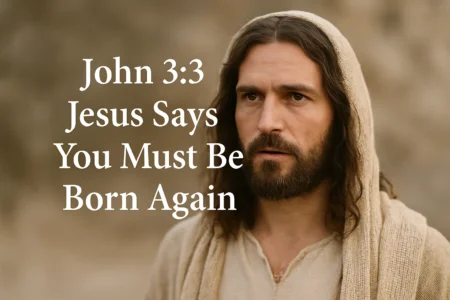
Jesus doesn’t even say thanks. He skips the small talk entirely. He looks this important leader in the eye and says, “You’ve got to be born again.”
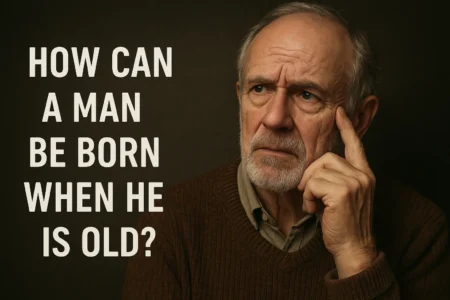
Nicodemus freezes. His brain just stops. “Born again? I’m an old man. You want me to crawl back into my mother?”
That’s when Jesus drops the hammer. It’s a question that cuts deep. He asks, “Are you the teacher of Israel and do not understand these things?”
That question stings. It rips through the pretension and hits the core of the John 3:10 meaning. It isn’t just a scolding; it’s a reality check. It exposes the massive gap between knowing about God and actually knowing God. Why was Jesus so shocked? Why should this scholar have known better? And let’s be real—are we making the exact same mistake today?
More in John Chapter 3 Category
John 3:2 Commentary and John 3:1 Explained
Key Takeaways
- The Big Title: Jesus calls him the teacher, which means he was the top dog and had zero excuses for missing this.
- It’s Old News: This wasn’t a new idea; spiritual rebirth was right there in the prophets Nicodemus claimed to master.
- Brain vs. Spirit: You can memorize the whole Bible and still be blind to how the Spirit moves.
- Drop the Control: Getting the Spirit isn’t about analyzing data; it’s about losing control.
- Catch the Wind: Faith is wild and unpredictable, not safe and static.
Who was Nicodemus, really?
To get why this matters, you have to understand who is sitting across from Jesus. Nicodemus wasn’t just a volunteer at the synagogue. He was Sanhedrin. That’s like the Supreme Court meets the Vatican. We are talking serious power. He was one of seventy-one guys running the religious show for the whole nation.
But catch the specific wording Jesus uses. He doesn’t ask, “Are you a teacher?” He asks, “Are you the teacher of Israel?”
That little word “the” changes everything. It implies Nicodemus was the main guy. The expert. If you had a tough question about the Law, you went to him. He had the pedigree. He had the respect.
I remember when I first landed a management gig years ago. I thought I was the man. I had the title on the door, the office, the whole bit. I walked into meetings thinking I had all the answers just because I was the boss. Then, a kid who had been working there for two months—an intern—asked me a simple question about our product that I couldn’t answer. I froze. I tried to fake it, but everyone knew. I was exposed.
That hot flush of embarrassment? That is exactly where Nicodemus is sitting. He is the master of Israel, yet a carpenter from the sticks is schooling him on basic spiritual stuff. Jesus is showing us that your title means nothing in the Kingdom. You can wear the fancy robes, but if you don’t get the Spirit, you’re missing the point.
What did Jesus expect him to know?
This is the big question. Was Jesus being unfair? Was He popping a quiz on a subject Nicodemus never took?
Nope. That is the whole point of the John 3:10 meaning. Jesus expected Nicodemus to know this stuff. He was genuinely surprised that he didn’t. This tells us that being “born again” wasn’t some new Christian invention. It was the finish line the Old Testament had been pointing to all along.
Nicodemus spent his life with his nose in the scrolls. He memorized the rules. He debated the fine print. But he missed the plot. Jesus is basically saying, “You’ve been staring at the signposts your whole life, but you never looked at where they were pointing.”
He expected Nicodemus to connect the dots. The prophets had been shouting for centuries that stone tablets weren’t enough. Rules couldn’t fix a broken heart. We needed surgery.
Was this actually in the Old Testament?
You bet. If Nicodemus was really the teacher, he should have been teaching Ezekiel 36 every weekend. Look at what the prophet wrote:
“I will give you a new heart and put a new spirit within you; I will remove your heart of stone and give you a heart of flesh.” (Ezekiel 36:26)
Does that ring a bell?
New heart. New Spirit. That is the definition of being born again. God promised a day was coming when He wouldn’t just hand out a rulebook. He promised to get inside us. He promised a transplant.
Nicodemus knew the verses. He probably chanted them. But he likely thought they were just poetic metaphors about Israel coming back from exile. He didn’t see them as personal. He didn’t see that he, the big-shot teacher, had a heart of stone that needed swapping out.
We fall into this trap all the time. We read the Bible like a history textbook, but we miss the invitation. We know the verses, but we don’t know the power. For a deep dive on how the prophets set this up, check out the archives at Westminster Theological Seminary.
Why is it so tough to move from head to heart?
We are control freaks. That’s just human nature. We like things we can measure. If I tithe, I’m good. If I show up on Sunday, I’m faithful. If I don’t cuss, I’m holy. It’s a deal. I do X, God gives me Y.
Nicodemus was the master of the deal. He had the checklist down cold.
But the Spirit? The Spirit wrecks your checklist.
Right before He drops the hammer in verse 10, Jesus talks about the wind. He says, “The wind blows where it wishes.” You hear it. You see the leaves shake. But you can’t tell it where to go. You can’t box it up.
That terrified Nicodemus. And if we’re honest, it scares us too.
I’m a guy who likes a plan. When my wife and I travel, I want the itinerary. I want to know where we eat, when we sleep, and the route we are taking. A while back, we took a trip with zero plan. Just got in the truck and drove. It drove me nuts for two days. I felt lost. I felt out of control.
But by day three? I felt free.
That is the shift Jesus is demanding. He is telling Nicodemus to shred the itinerary. The John 3:10 meaning challenges us to stop trusting our religious resume and start trusting the wild movement of God. You can’t climb a ladder to get born again; you have to stand still and let it hit you.
Does being smart get in the way?
It can. It absolutely can.
We tend to think the fix for spiritual shallowness is just more data. Read another book. Listen to a podcast. Learn Greek. But Nicodemus proves you can have a PhD in theology and still be spiritually dead.
Sometimes, our brain becomes a fortress. We build walls of logic and doctrine to keep God at a safe distance. We analyze Him so we don’t have to experience Him. We turn the Almighty into a subject to study instead of a Father to trust.
When Jesus says, “You must be born again,” it makes no logical sense. It’s messy. It’s weird. And the intellectual mind hates weird. It wants to solve the puzzle.
Jesus didn’t need Nicodemus to solve anything. He needed him to surrender. He needed him to admit that all his degrees hadn’t brought him one inch closer to the Kingdom.
This is a warning for us. We value information above everything. But information without revelation is just noise. We need to be careful that our Bible study doesn’t replace knowing Jesus.
How does this hit the modern church?
This isn’t just ancient history. This is a mirror for right now. We have “Teachers of Israel” everywhere. We have celebrity pastors, authors, and influencers. We have more Bible apps and tools than any generation ever.
But do we have the wind?
Are we building organizations or organisms? Are we building impressive religious machines that run perfectly fine without the Holy Spirit?
If the Holy Spirit left your church this Sunday, would anybody notice? Or would the lights still work, the band still rock, and the sermon still run 35 minutes?
Jesus is asking us the same thing he asked Nicodemus. “Are you the leaders of the modern church, and you don’t get how the Spirit moves?” It’s a gut check. It forces us to ask if we are relying on our strategies and excellence, or if we are desperate for a move of God we can’t control.
What is the deal with the wind analogy?
Let’s circle back to that wind comment because it sets up the rebuke. Jesus uses the word pneuma. In Greek, it’s a cool word because it means both “spirit” and “wind” or “breath.”
- Invisible: You can’t see the wind. You only see what it touches.
- Uncontrollable: It does what it wants.
- Necessary: You can’t live without breath.
Nicodemus lived in a world of static, rigid laws. Stone. Unmoving. Jesus introduces a world of movement. Life. Breath.
Can you catch the wind?
You can’t manufacture wind, but you can set a sail. That’s the difference. Religion tries to create the wind with fans—hype and emotion. True faith just raises the sail and waits.
I have a buddy who sails. He told me once that the most helpless feeling in the world is being dead in the water. No wind. You just sit there. You can scream, you can row until your arms fall off, but you aren’t going anywhere fast. But when that breeze kicks up? Everything changes.
That is the Christian life. It’s not rowing. It’s sailing. Nicodemus was exhausted from rowing his boat of good works. Jesus offered him the wind.
Did Nicodemus ever figure it out?
I love this part of the story because it gives me hope. Nicodemus didn’t get it that night. He probably walked away scratching his head, confused and maybe a little offended.
But the seed stuck.
We see him later in the Gospel of John. The Pharisees are trying to arrest Jesus illegally, and Nicodemus speaks up. He puts his neck on the line. He asks, “Does our law judge a man before it hears him?” (John 7:51). He uses his legal knowledge to defend the Lawgiver.
And then, the finale. After the crucifixion, when the bold disciples like Peter have scattered, Nicodemus shows up. He comes with Joseph of Arimathea to take the body of Jesus.
And he doesn’t come empty-handed. He brings a mixture of myrrh and aloes, about a hundred pounds of it. Do you know how much that is? That is a King’s burial. That is a fortune.
He finally got it.
The teacher of Israel realized he was standing before the King of Israel. He moved from the dark alley into the light. He stopped asking “How can this be?” and started declaring “This is who He is.”
Why we have to unlearn to learn
Here is the bottom line. Sometimes, our cup is just too full. We are so full of our opinions, our politics, our traditions, and our own pride that we have no room for Jesus.
We have to dump the cup.
I used to be a debater. I thought my job as a Christian was to win arguments. I had the answers. I could dismantle an atheist in five minutes. But I was a jerk. I was winning arguments and losing people.
I remember sitting with an old guy on a park bench, giving him my best logical proof for the resurrection. He listened, smiled, and asked, “That’s great, son. But does He know you?”
It stopped me cold. I was arguing facts; he was talking about friendship. I had to unlearn my need to be right so I could learn the power of being loved.
Jesus is asking you right now: Are you an expert in religion, but a stranger to the Spirit?
It’s okay if the answer is yes. It’s okay to be where Nicodemus was. The only sin is staying there. The only sin is faking it when you know you’re dry inside.
Drop the title. Forget the reputation. Be willing to look foolish. Ask the Lord to blow the wind of the Spirit into your life. You might not know where it will take you, but I promise you, it’s better than sitting in the dark.
FAQs – John 3:10
What is the significance of John 3:10 in understanding Nicodemus’s story?
John 3:10 highlights how Nicodemus, despite being a respected teacher of Israel, lacked understanding of the spiritual rebirth Jesus was teaching, exposing the gap between knowing about God and truly knowing Him.
Why was Jesus so surprised that Nicodemus did not understand the concept of being born again?
Jesus was surprised because Nicodemus was the teacher of Israel, well-versed in prophetic scriptures like Ezekiel 36, which clearly spoke of spiritual renewal, so Jesus expected him to grasp the concept.
How does Ezekiel 36 relate to the idea of being born again?
Ezekiel 36 speaks of God giving a new heart and spirit, which epitomizes the biblical concept of being born again—receiving internal spiritual transformation rather than just following external rules.
How can modern churches avoid becoming religious machines devoid of the Holy Spirit?
Modern churches should prioritize reliance on the Holy Spirit over organizational control and strategies, fostering an environment where the Spirit’s movement is expected and welcomed, rather than just maintaining impressive religious programs.