
I still get a knot in my stomach thinking about my best friend’s wedding a few years back. We were groomsmen, squeezed into tuxes that were too hot for a humid July afternoon, trying to look cool while sweating through our undershirts. Then the caterer grabbed my arm and whispered the sentence that haunts every event planner: “We’re out of ice.”
It sounds ridiculous, right? Just frozen water. But when you have two hundred guests looking for cold drinks and the reception is barely an hour in, it feels like the sky is falling. The panic was real. I didn’t think; I just reacted. I sprinted to my truck and hit three different gas stations, throwing bags of ice into the bed like I was robbing a bank. We got back just in time. Nobody noticed. The party went on. But I’ll never forget that sinking feeling—the fear that the celebration was about to crash and burn because of a logistics failure.
That specific anxiety is why I feel such a kinship with the story in the second chapter of John. We tend to sanitize Bible stories. We view them through stained glass, forgetting the noise, the smells, and the stress. The Wedding at Cana wasn’t a quiet church service; it was a massive, loud, chaotic party. And it was on the brink of disaster. A family’s reputation was hanging by a thread. Right in the middle of this domestic train wreck, we get John 2:9, a verse that captures the moment the miracle got confirmed—not by an angel shouting from the clouds, but by a wedding planner tasting a cup of wine.
When you really dig into John 2:9, you stop seeing a magic trick and start seeing a God who works in the shadows, often saving the best stuff for the people who are too busy serving to notice.
More in John Chapter 2 Category
Key Takeaways
- The Inside Scoop: The guy running the show tasted the miracle, but the servants were the only ones who knew where it came from.
- Better Than It Had To Be: Jesus didn’t just make “good enough” wine; He made a vintage that baffled the expert.
- Walking Blind: The miracle didn’t happen until the servants took a risk and did something that made zero sense.
- God in the details: The Creator of the universe cares about social embarrassment and party logistics.
Why Does a Wedding Crisis Matter So Much?
Ever ask yourself why Jesus picked a party foul for his debut miracle? He didn’t start by raising the dead. He didn’t start by healing a leper. He started by saving a groom from looking like an idiot.
In that culture, hospitality wasn’t just being nice; it was honor. Running out of wine was a massive social failure. It screamed that the family was either broke, stingy, or incompetent. People would have talked about “that wedding where the wine ran dry” for decades. It would have been a stain on the couple’s name before their marriage even really started.
This is why John 2:9 hits me so hard. Jesus stepped into a situation that wasn’t life or death—it was just purely social stress—and He fixed it. It tells me God cares about the stuff that keeps me up at night, even if it seems trivial in the grand scheme of things. I’ve prayed about lost car keys with the same intensity as I’ve prayed for sick relatives. Why? Because the stress is real to me. The Master of the Banquet tasting that wine is proof that God gets involved in the gritty, physical details of our Tuesday afternoons.
Who Was this “Master of the Banquet” Anyway?
We need to get a read on the guy doing the taste test here. The Greek word is architriklinos, which is a mouthful, but he was basically the headwaiter or the toastmaster. Think of him as a cross between a high-end maître d’ and an MC.
His job was on the line. If the food was cold? His fault. If the wine ran out? His fault. He wasn’t just hanging out; he was working.
Was He Just a Drunk Guest or a Professional?
I’ve heard skeptics say, “Oh, everyone was probably so wasted they couldn’t tell the difference.” But the text actually suggests the opposite about this guy. He was sober enough to be in charge. He knew his wine.
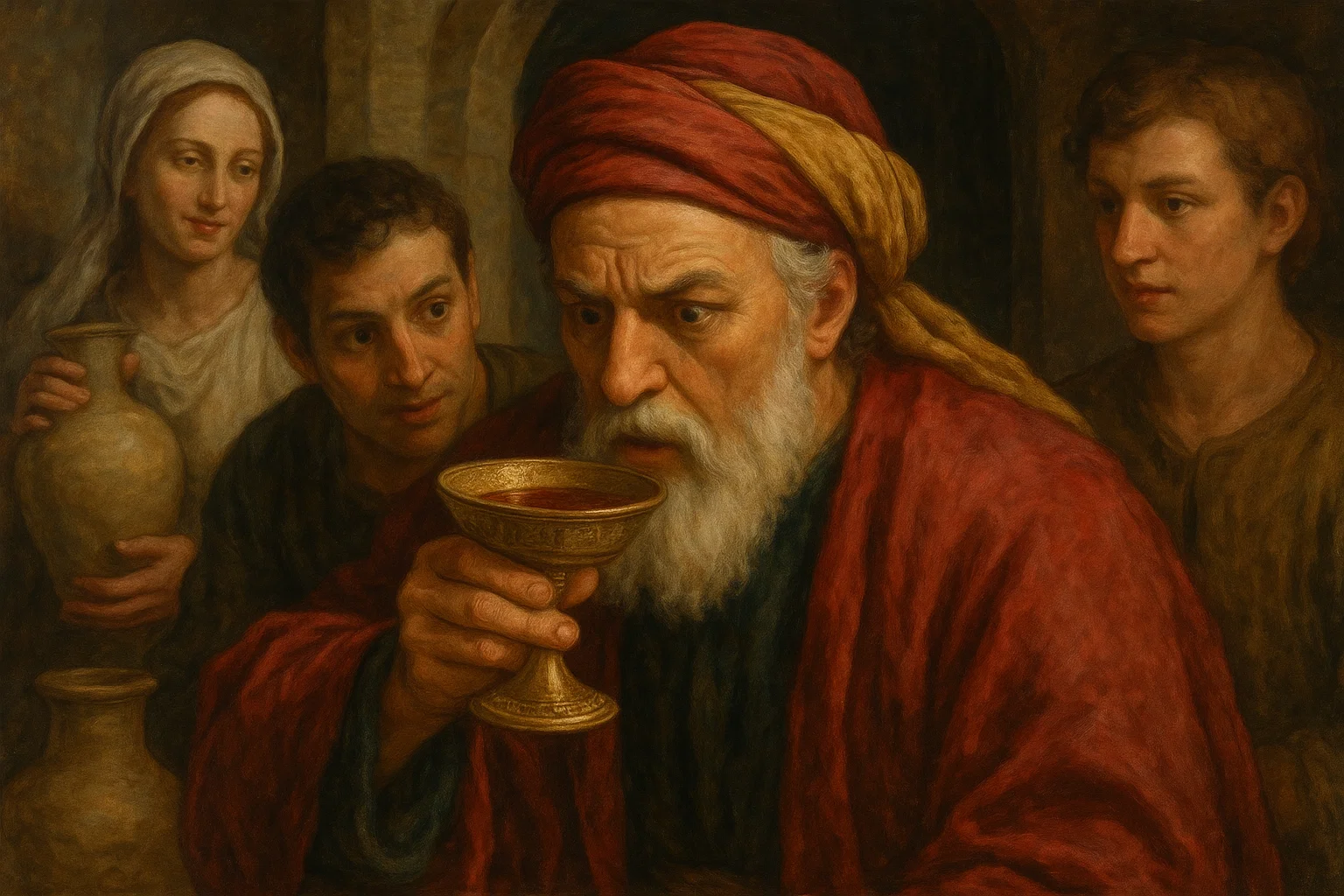
When he tasted the water-turned-wine, his reaction wasn’t the slurred “I love you guys” of a drunk guest. It was the sharp, surprised critique of a pro. He knew instantly that this wasn’t the cheap swill people usually bring out late in the game to save money. This adds a serious layer of grit to the story. The verification came from a guy who had no bias. He didn’t know Jesus. He didn’t know a miracle happened. He just knew quality when it hit his tongue.
How Did the Miracle Actually Happen in John 2:9?
The actual mechanics? We have no idea. But the timeline in John 2:9 gives us a hint. It says, “When the ruler of the feast had tasted the water that was made wine…”
The shift happened somewhere between the stone jars and the guy’s lips.
I worked construction the summer after college. It was brutal. My job was basically “move heavy thing to other place.” Lumber, concrete, drywall. I was a hauler. And I learned pretty fast that the haulers—the grunts—see things the architects and the foremen never see. We knew which walls were slightly off. We knew where the shortcuts were taken.
The servants at Cana were the haulers. They filled the jars. They dipped the ladle. They walked it across the room.
Did the Water Change in the Jar or the Cup?
This is the stuff I love to think about. Did the water turn into Merlot the second it hit the jar? Or did it transform while it was sloshing around in the ladle? Or—and this is the one that gets me—did it only turn to wine the second it touched the master’s tongue?
The text says the servants “drew the water,” implying they were carrying water. But the master tasted wine. That suggests the miracle happened during the act of obedience. As they moved, the reality changed. It’s a reminder that usually, the solution to my mess doesn’t show up until I start moving my feet, even if I don’t know where I’m going.
Why Is the “Unknown Origin” So Significant?
Check the parenthesis in John 2:9. It’s my favorite aside in the Bible: (though the servants who had drawn the water knew).
The VIP tasted the blessing, but he didn’t know the backstory. He enjoyed the miracle without knowing the Miracle Maker.
But the help knew.
There is a weird privilege in being the one serving. The people at the bottom of the totem pole, the ones hauling water and scrubbing pots, were the only ones let in on the secret. The groom was clueless. The bride was clueless. The master was baffled. Just Jesus, His mom, and a few sweaty servants knew what really went down.
I remember volunteering to wash dishes at a huge men’s retreat a few years ago. While the big-name speakers were on stage getting applause, I was in the back, elbow-deep in greasy water. Late that night, the main speaker wandered into the kitchen looking for a glass of water. He sat down on a milk crate, and we talked for an hour about real life, struggles, and faith. The guys in the front row got a polished sermon; I got a real conversation.
Serving puts you in the room where the real work happens. The servants in John 2:9 had a secret knowledge that the guys at the head table completely missed.
What Does “The Best for Last” Tell Us About God’s Character?
The master called the groom over and basically said, “You did this backward. Everyone serves the good stuff first, then brings out the cheap stuff when people can’t taste the difference. You saved the best for now.”
This tells you everything you need to know about how God creates. He doesn’t do “bare minimum.” He didn’t make a passable table wine just to stop the complaining. He made a vintage that embarrassed the other wine at the party. It wasn’t just a chemical swap; it was perfection.
Are We Settling for “Good Enough”?
We usually just want God to get us through the day. We pray for survival. But John 2:9 hints that God is interested in abundance. He brings a richness that the world’s “first wine” can’t touch. The world gives you its best upfront—the excitement of a new car, the honeymoon phase, the new job high—but it always runs out or goes flat. Jesus saves the best stuff for the end.
Why Were the Servants the Only Ones in on the Secret?
You don’t get the revelation without the obedience. The servants knew because they did something that felt incredibly stupid.
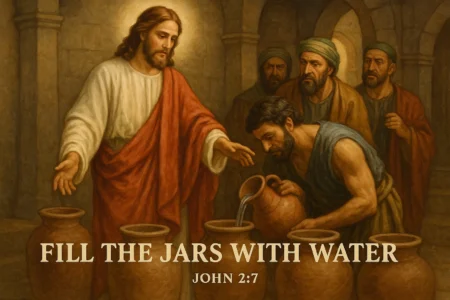
Put yourself in their sandals. Mary says, “Do whatever he tells you.” Jesus points to six massive stone jars. These weren’t for drinking water; they were for ceremonial washing. People washed their hands and feet from these. They were essentially giant washbasins. And Jesus says, “Fill ’em up.”
They could have rolled their eyes. They could have said, “We need wine, man, not bathwater.” But they did it. They filled them to the brim.
Then the scary part: “Now draw some out and take it to the boss.”
Imagine taking a ladle of warm wash water to your boss and presenting it as fine wine. That’s a good way to get fired—or punched. It was a risk. It required trusting this stranger more than they trusted their own eyes.
Can We See Miracles While Doing Grunt Work?
We think we need to be at a worship night or on a mountain to see God move. But John 2:9 happened in the middle of a work shift. The servants were tired. They were probably annoyed at the lack of planning by the groom’s family. Yet, that is exactly where the glory broke through.
If you feel like your life right now is just carrying heavy buckets of water back and forth, take heart. You are in the prime spot to see the water turn to wine.
How Does This First Miracle Set the Stage?
John calls this a “sign.” It wasn’t a parlor trick. It was a statement. The master tasting the wine is a picture of the old system meeting the new one. The water jars represented the Old Law—the rituals, the washing, the constant trying to be clean.
Jesus took those vessels of the Law and filled them with Grace. And not just a little bit of grace—gallons of it. High-quality, overflow grace. The master of the banquet represents the old guard, tasting the New Covenant and having to admit, “Okay, this is way better.”
What Does John 2:9 Mean for Us Right Now?
We live in a world that’s always running dry. We run out of patience with our kids. We run out of money before the month ends. We run out of hope. We are all just like that couple at Cana, standing on the edge of a disaster, hoping nobody notices we’re empty.
John 2:9 is an invite to trust the Master’s timing. It’s an invite to be like the servants—willing to look foolish, willing to do the work, willing to trust that Jesus can take the plain, boring water of our daily grind and turn it into something ridiculous.
It also challenges me to look for God in the weird spots. The miracle didn’t happen with lightning. It happened in a cup. It happened in a sip. God is usually working in our lives in ways we don’t even catch until we stop and actually “taste” what He’s put in front of us.
The Verdict
The verdict in John 2:9 is pretty simple: the new wine is better. The master confirmed it. The servants saw it happen. The disciples started to believe.
If you want to dig a bit deeper into why this was such a massive deal culturally, check out this breakdown of Jewish Wedding Customs. It really highlights just how big of a hole Jesus dug this family out of.
When we hit those empty spots in our own lives, we can look back at this. We can remember the panic of the empty jars and the relief of the full cup. We serve a God who saves the best for last, who loves to involve the little guys in his big plans, and who turns water into wine. So, if you’re carrying a heavy load today, just keep walking. Keep pouring. The Master is about to taste what you brought, and it’s going to be good.
FAQ – John 2:9
What is the significance of John 2:9 in the wedding at Cana story?
John 2:9 captures the moment when the master of the banquet tastes the transformed wine, confirming the miracle. It highlights that God works in subtle, often unnoticed ways, especially in the details of everyday life.
Who was the ‘Master of the Banquet’ in John 2:9?
The ‘Master of the Banquet’ was the headwaiter or toastmaster, responsible for serving wine and overseeing the banquet’s logistics. He was a professional who knew quality wine and recognized the difference when he tasted the transformed water.
How did the miracle of turning water into wine happen in John 2:9?
The exact mechanics are not detailed, but it occurred during the act of obedience as the servants drew water and served it. The transformation likely happened as the water was carried or poured, suggesting God’s power works in the process of our actions.
Why is the concept of ‘saving the best for last’ important in understanding God’s character?
It shows that God does not settle for mediocrity or the second best, but His best is reserved for the final and most significant moments, demonstrating His goodness and desire to bless abundantly.
What lessons can we learn from the miracle at the wedding in Cana?
We learn that obedience to Jesus invites His supernatural power into everyday life, that God’s timing is perfect, and that He desires to bless us with His best in His perfect plan.