
I stood next to my best friend, Mark, at the altar, and sweat was literally dripping down my back. The air conditioning in the old chapel had died ten minutes before the music started, but that wasn’t why Mark looked like he was about to pass out. He was terrified. He had spent a year micromanaging every single detail of this day, from the obscure indie playlist to the specific glaze on the appetizers. He needed everything to be perfect.
We guys do that, don’t we? We obsess over the logistics. We check the cooler three times to make sure it’s full. We hover over the grill because we’re terrified of overcooking the steak. Running out of resources isn’t just an inconvenience; it feels like a failure of manhood. It signals that we didn’t prepare. We couldn’t provide.
That specific knot in the stomach is exactly what was hanging over the wedding in Cana. The wine was gone. The supplies had dried up. The party was nose-diving, and the groom’s reputation was about to go down with it.
Then Jesus stepped in.
He didn’t just fix the glitch, though. He didn’t just make a run to the corner store. He completely shattered everyone’s expectations.
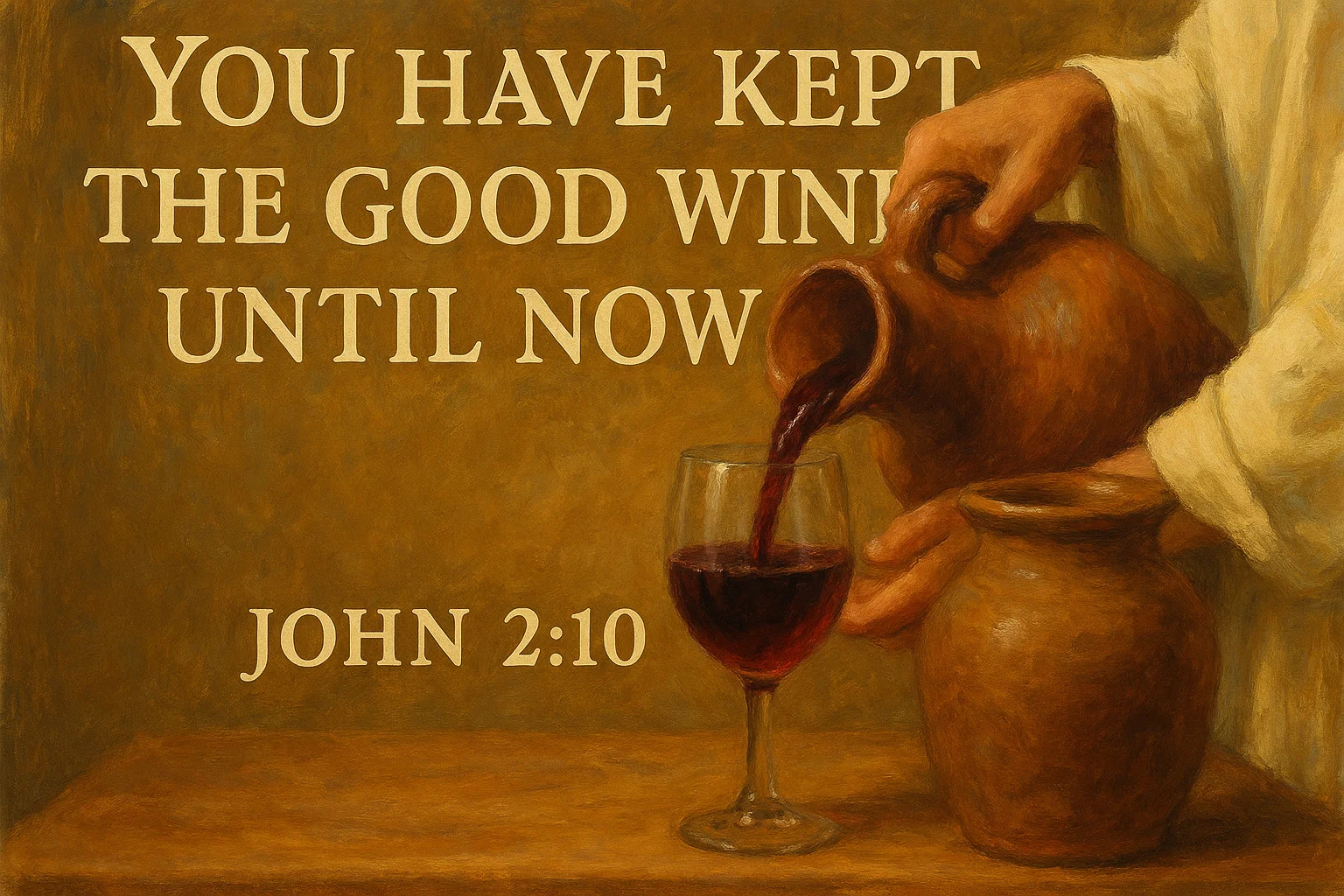
When the master of the banquet tasted the water that had become wine, his eyes must have popped out of his head. He didn’t know the backstory. He just knew what hit his tongue. He pulled the bridegroom aside and said, “Everyone brings out the choice wine first and then the cheaper wine after the guests have had too much to drink; but you have saved the best till now.”
That right there is the gut-punch of John 2:10. It’s not a comment on beverage quality. It’s a theological earthquake. It tells us that with God, the graph doesn’t go down. It goes up.
More in John Chapter 2 Category
Key Takeaways
- God’s Clock is Different: We try to impress people upfront. God waits. He saves the heavy hitters for the end of the game.
- Scarcity is a Myth: Jesus didn’t provide a few bottles to get them through. He made between 120 and 180 gallons. He drowned the problem in wine.
- The Upgrade: The “new wine” is Jesus’ grace. It makes the “old wine” of religious rules look like dirty dishwater.
- The Swap: God takes ordinary stuff—water, clay jars, broken people—and turns them into something premium.
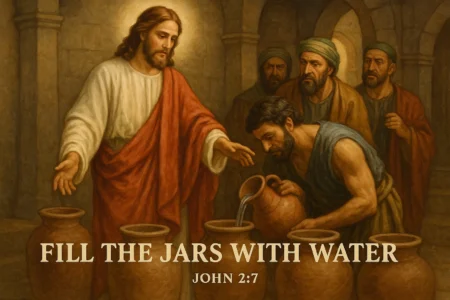
- Blind Faith: The servants had to look ridiculous carrying water to the master before it turned into wine. Action preceded the miracle.
Why Does the Master of the Banquet’s Reaction Matter?
To get this, you have to understand the pressure cooker of a first-century Jewish wedding. These weren’t four-hour receptions at a country club. They were week-long festivals. The whole village showed up. Running out of wine wasn’t a “my bad” moment. It was a social catastrophe. It brought shame on the groom’s family that people would talk about for decades.
I remember a project I tackled in my garage a few years back. I was building a custom dining table for my wife—a surprise. I bought this gorgeous black walnut, but I miscalculated the cuts. I ran out of the good wood about 75% of the way through. Panic set in. I actually stood there looking at a pile of cheap pine scrap, wondering if I could stain it dark enough to fool her. That’s the human default: manage the decline. When things get tight, we lower the bar. We fake it.
The master of the banquet expected that decline. He knew how the world works. You serve the expensive vintage when palates are sharp. Once the guests are a little tipsy and their senses are dulled, you roll out the vinegar. It’s basic economics. Save money where you can.
John 2:10 flips the table. The master’s reaction is the proof. If Jesus had made “okay” wine, nobody would have noticed. It would have just been a relief. But He made the best wine.
This third-party verification is huge. The master had no skin in the game. He didn’t know a miracle had happened. He wasn’t biased. He simply tasted excellence where he expected swill. This tells us something vital: when God works in your life, the quality is undeniable. He doesn’t do knock-offs.
How Does John 2:10 Reveal the Character of Jesus?
Why did Jesus go overboard? Seriously, He could have turned the water into decent table wine. No one would have complained. They were thirsty and desperate.
But Jesus creates a Grand Cru.
This screams about His generosity. I look at my own prayer life and realize how often I insult God with low expectations. I usually ask for the bare minimum. “Lord, just help me make rent,” or “God, just get me through this meeting without me losing my cool.” I treat God like a cosmic vending machine that dispenses survival rations.
John 2:10 laughs at that mindset. It yells abundance.
Scholars estimate those six stone water jars held twenty to thirty gallons each. Do the math. That’s roughly 600 to 900 bottles of wine. For a peasant wedding in a backwater town like Cana? That is an excessive, lavish, almost embarrassing amount of high-quality provision.
This verse teaches us that Jesus isn’t stingy. He doesn’t ration His grace with an eyedropper. When He saves you, He doesn’t just save you “a little bit.” He floods the engine. He gives you a life that is richer, fuller, and more complex than anything you could cobble together on your own.
Is God Holding Back on Me?
That’s the question that keeps us awake at 2 AM, isn’t it? We look around and see everybody else getting the promotion, the spouse, the breakthrough. We feel like we’re stuck drinking lukewarm water while everyone else is toasting with the good stuff.
I hit a wall in my mid-thirties. I felt completely shelved. My career stalled out while I watched guys I graduated with bypass me. They were buying vacation homes and posting photos of their “blessed” lives on Instagram. I felt like God had lost my file. I sat there thinking, I served the good wine of my youth, and now I’m left with the dregs. Is this it?
John 2:10 reminds us that God operates on a reverse timeline.
The world says your youth is your prime. The world says it’s all downhill after forty. The world says you peak early and then manage the decay until you die.
The Kingdom of God says, “No.”
“You have kept the good wine until now.”
If you are breathing, God isn’t finished. If you feel like you are in a holding pattern, you might actually be in a fermentation process. Great wine takes time. It sits in the dark. It waits. It matures. If you feel hidden right now, you aren’t necessarily rejected. You might just be aging into something the Master is about to uncork.
What is the Prophetic Significance of the “Best Wine”?
We miss the point if we only look at this as a cool party trick. John calls his miracles “signs.” A sign points to something else. It says, “Look over there.”
So, what does the wine point to?
In the Old Testament, an ocean of wine was a symbol of the Messianic age. Amos 9:13 talks about new wine dripping from the mountains. Jeremiah 31:12 talks about rejoicing over the Lord’s bounty.
By dropping the best wine at the end of the party, Jesus is signaling that the wait is over. The Messiah is in the building.
Think about the containers He used. He didn’t snap His fingers and make wine appear in the cups. He used six stone water jars “set there for the Jewish rites of purification.” These jars represented the Old Covenant—the law, the washing, the constant striving to be clean enough for God.
But the water in those jars could only clean your hands. It was temporary. You washed, you touched something, you got dirty, you washed again. Exhausting.
Jesus hijacks the vessels of the Law and fills them with the wine of Grace. The “good wine” is the blood of the New Covenant. The Law came first (the water), and it was necessary. It showed us our dirt. But the Gospel (the wine) came later, and it is infinitely better.
The master of the banquet didn’t realize he was prophesying, but he was. The old system was dry. It couldn’t keep the party going. Humanity had “drunk freely” of the law and found it couldn’t save them. Now, Jesus brings the new substance—His own life—that brings actual joy.
Why Did Jesus Choose a Wedding for His First Miracle?
A funeral seems like a more spiritual place for a Savior to show up, right? Heal the dead. Dry the tears. That feels heavy. Important. A wedding feels… frivolous.
But God loves a party.
More specifically, the Bible begins with a wedding (Adam and Eve) and ends with a wedding (Christ and the Church in Revelation). Jesus launching His ministry at a wedding is a structural bridge. He is the true Bridegroom.
I remember the day I proposed to my wife. My hands were shaking. I wanted everything to be right because I wanted her to know she was valued. I wasn’t just asking for a roommate; I was offering a covenant. I was saying, “I’m in this for the long haul.”
When Jesus saves the wedding at Cana, He is protecting the sanctity of the covenant. But He is also showing us what the Kingdom of Heaven tastes like. It isn’t a funeral dirge. It isn’t a silent library where you get shushed. It is a banquet. It is laughter. It is the best wine served when we least deserve it.
John 2:10 captures the surprise of grace. We deserve the cheap wine. Actually, let’s be honest, we deserve the water. No, truth be told, we deserve empty jars. But He gives us the vintage reserve.
How Can We Apply the Principle of “Best for Last” Today?
We live in a culture of instant gratification. We want the dessert before we eat our broccoli. We want the CEO salary on the first day of the internship. We consume the “good stuff” immediately and then wonder why the rest of life feels flat and boring.
Applying John 2:10 means embracing the grind of delayed gratification. It means trusting that obedience to God, even when it feels like just lugging heavy jars of water, leads to a miraculous outcome.
Those servants worked their tails off. Have you ever carried twenty gallons of water? It weighs over 160 pounds. They had to make multiple trips to the well. They were sweating. Their backs ached. They probably muttered to themselves, Why are we doing this? The party is dead. Water won’t fix a wine shortage.
Faith often feels like carrying water when you need wine.
You keep loving that difficult spouse who won’t change. You keep praying for that kid who won’t call. You keep showing up to that job with integrity even though the boss is a jerk. You are pouring water. It feels mundane. It feels stupid.
But you do it because Mary said, “Do whatever he tells you” (John 2:5).
And at the precise moment, Jesus transforms that grit into glory. You have to trust the process. You have to trust the timing. You can’t check out just because you haven’t tasted the vintage yet.
Does God Save the Best for Eternity?
This verse echoes way past our checkout date. For the believer, the trajectory of existence is infinitely upward.
I sat by the bedside of my grandfather as he passed away. He was a tough guy—a carpenter who built his own house—but cancer had shrunk him down to nothing. It was brutal to watch. From a worldly perspective, the wine had run out. The party was over. The lights were coming up.
But as I read Scripture to him, I realized something that gave me chills. For him, the “good wine” was just about to be poured.
In this life, we get tastes of God’s goodness. We experience love, a perfect sunset, a great steak, a belly laugh. But it’s all just an appetizer. It is the water.
The moment a believer steps into eternity, the Master of the Banquet—God the Father—welcomes us. And we will look back at the absolute best days of our earthly lives, the days we thought couldn’t get any better, and we will realize that was just the cheap stuff.
“You have kept the good wine until now.”
Heaven is the good wine. The best is not behind you. I don’t care how old you are, how much you’ve lost, or how much your body aches. If you are in Christ, your best days are not in your high school yearbook. They are billions of years in your future.
Why Do We Often Settle for “Cheap Wine” in Our Lives?
There is a warning in John 2:10, too. The master mentions that people usually serve the cheap wine “after the guests have had too much to drink.” The Greek implies their senses are dulled. They can’t tell the difference anymore.
Sin dulls our palate.
We compromise. We settle for cheap substitutes for joy. We turn to illicit relationships, chemical substances, or material hoarding to try to keep the buzz going. We drink the cheap swill of the world and convince ourselves it’s a vintage Cabernet.
I’ve been there. I’ve chased the salary thinking it would satisfy. I’ve chased the applause of peers. It tastes sweet for a second, but it leaves a bitter aftertaste. It gives you a headache in the morning. It never delivers what the label promised.
Jesus offers something that clarifies the senses rather than dulling them. His joy doesn’t leave you with a hangover. It wakes you up.
Are you settling? Are you drinking the cheap wine of bitterness? The cheap wine of pornography? The cheap wine of resentment?
Jesus stands ready to turn the water of your messy, empty life into something pure. But you have to bring the jars to Him. You have to admit you are empty. You have to admit the party is dying.
What Does This Teach Us About Patience and Timing?
The hardest part of the miracle at Cana wasn’t the transformation; it was the gap. The silence between the command and the result.
Jesus said, “Fill the jars.” They filled them. Jesus said, “Draw some out.” They drew it. Jesus said, “Take it to the master.”
Imagine that walk across the room.
You are a servant holding a ladle of water. You are walking toward the most important man at the party. If he tastes water, you might get fired. You might get beaten. You have to walk the entire distance in faith, looking like a fool.
The miracle happened somewhere between the well and the master’s lips.
We want the miracle before we walk. We want the water to turn to wine in the bucket so we can see it, verify it, and then move. God usually changes it as we go.
John 2:10 is the destination. But you are likely currently on the walk. You are holding a cup of water, trembling, walking toward a scary situation, trusting that Jesus is going to come through.
Don’t drop the cup. Don’t turn back. Keep walking.
A Final Thought on Transformation
The Wedding at Cana is the first sign recorded in John’s Gospel. It sets the tone for everything that follows. It tells us that Jesus is a transformational Savior. He changes water to wine. Later, He changes death to life. He changes shame to glory.
The master of the banquet was shocked. The bridegroom was relieved. The disciples believed.
But the quiet beauty of John 2:10 is that it serves as a promise to you and me today. God hasn’t run out of ideas for your life. He hasn’t exhausted His supply of grace. He isn’t looking at your life and thinking, “Well, I guess that’s the best I can do.”
He is the God of the encore.
So, if you feel like the wine has run out, lift up your empty cup. The Best Vintner in the universe is in the room. And He has saved the best for now.
For further study on the cultural background of Jewish weddings, visit the Jewish Encyclopedia’s entry on Marriage Ceremonies.
FAQ – John 2:10
What is the significance of John 2:10 in understanding God’s way of working?
John 2:10 highlights that with God, the trajectory isn’t downward; it rises. It signifies that God’s timing and plans are different from ours, often saving the best for last and bringing about an abundant, quality-filled outcome.
Why did Jesus perform His first miracle at a wedding in Cana?
Jesus chose a wedding for His first miracle because weddings symbolize covenant and joy, which align with His mission. It also connects the beginning of His ministry with the biblical theme of a wedding, illustrating that He is the true Bridegroom bringing joy and abundance.
What does the ‘best wine’ symbolize in the story of Cana?
The ‘best wine’ symbolizes the abundance and excellence of Christ’s grace, signaling the arrival of the Messianic age. It also represents the transition from the old covenant of the law to the new covenant of grace, which is richer and more fulfilling.
How does the story of the water jars relate to the Old and New Covenants?
The water jars, set for Jewish purification rites, symbolize the old covenant based on the law, which is temporary and exhausting. Jesus filling them with wine signifies replacing the law with grace, representing the new covenant that offers eternal life and joy.
What lesson does the miracle at Cana teach us about patience and God’s timing?
The miracle teaches that God’s process often involves waiting and walking in faith, even when the results are not immediately visible. Trusting God’s timing and continuing to obey leads to miraculous outcomes, demonstrating that His best is saved for the right moment.